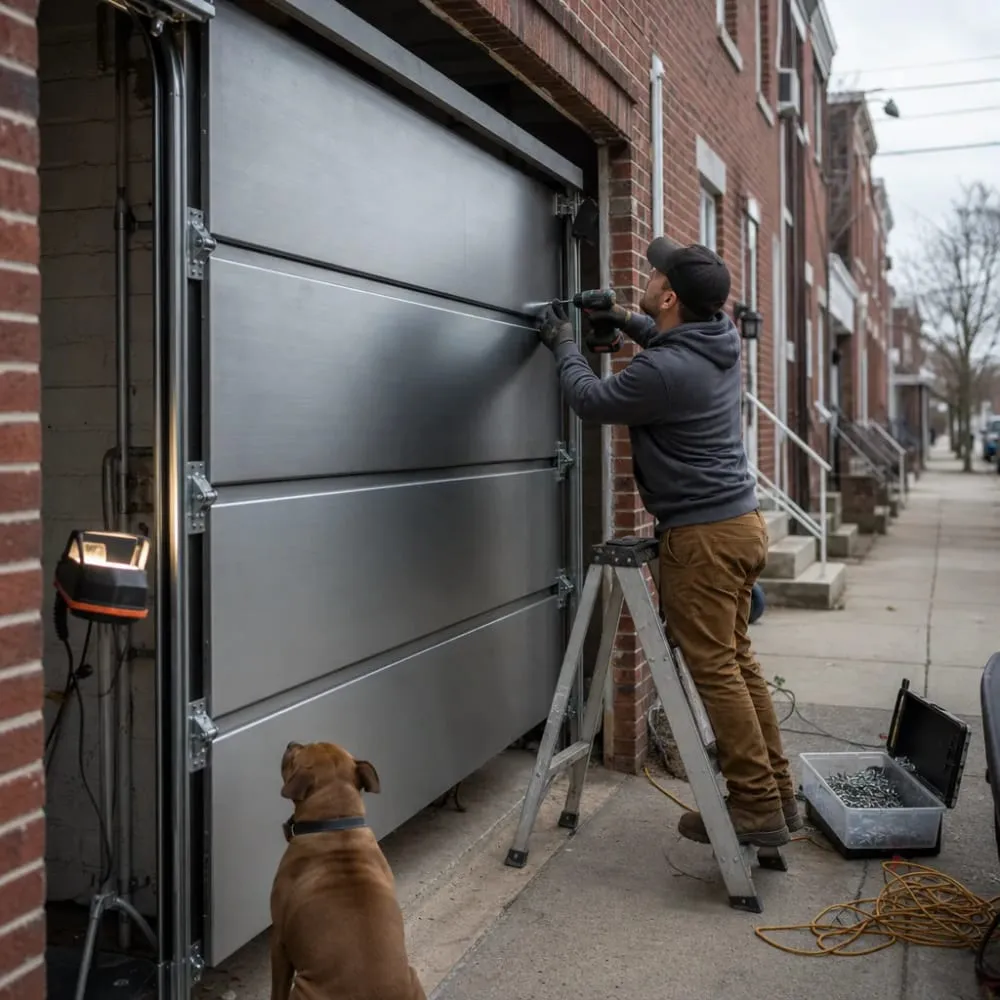
Deciding Between Repair and Full Sectional Installation
If your door's sections are solid and only one part has failed, such as a spring, a cable, a roller, or a single panel, a repair is usually the right call. A full sectional garage door installation makes sense when several sections are damaged, the door is warped or rusted through, or you keep paying for fixes on a door that's worn out. Look at the whole door, not just the part that broke today.
Most garage door problems don't mean you need a new door. A sectional door is a set of hinged panels riding on rollers in a track, lifted by springs and cables. When one of those parts fails, the whole door can stop working, even if the panels are fine. The door looks dead, but the fix may be small.
You likely need a repair, not a new door, if:
- A spring snapped. You may have heard a loud bang, and now the door feels very heavy or won't lift. That's a spring replacement, not a new door.
- A cable came loose or frayed, and the door hangs crooked or one side drops. A cable adjustment usually handles it.
- The door rubs, sticks, or jumps in the track. Bent track or worn rollers can be fixed with track alignment.
- One panel took a hit from a car bumper or a bike, and the other sections still line up and seal. A single panel replacement may be enough.
- You feel a draft or see light under the door. A new bottom seal or weather stripping fixes that.
- The door won't close and the opener light blinks. That's often a safety sensor out of line, which is a quick fix.
If that's your situation, don't buy a new door. Fix the part that failed and keep the door you have.
A full sectional installation starts to make sense when the problems are in the door itself, not just one part. Watch for these signs:
- Two or more panels are cracked, dented, or bowed, and they no longer line up when the door closes.
- Steel panels have rusted through, or wood panels are rotting at the bottom where water sits.
- The door sags in the middle even after the springs and hardware are set right.
- Matching replacement panels for your door aren't available anymore, so a patch would look out of place.
- You've paid for several repairs in a short time and the door is still giving you trouble.
- You want a door that's better sealed or looks different, and the old one can't get you there.
Cost plays a part too, but it's not only about the price of one repair. Think about what's next. If the panels are failing, fixing a spring today won't stop the next bill. A door with sound panels and a fresh set of springs can keep working well for a long time. The age of the door, how many parts are worn, and whether parts can still be found all matter more than any single number.
Here's a simple way to think about it. If the problem is a part that moves, like springs, cables, rollers, or hinges, lean toward repair. If the problem is the panels themselves, and it's more than one, lean toward a new door.
That's why we look at the full system before we suggest anything. We check the springs, cables, tracks, rollers, panels, seals, opener, and safety sensors so you know what failed and what's still in good shape. You'll get written pricing before any work begins. That way you can compare a repair against a new installation with real numbers in front of you, and the choice stays yours.
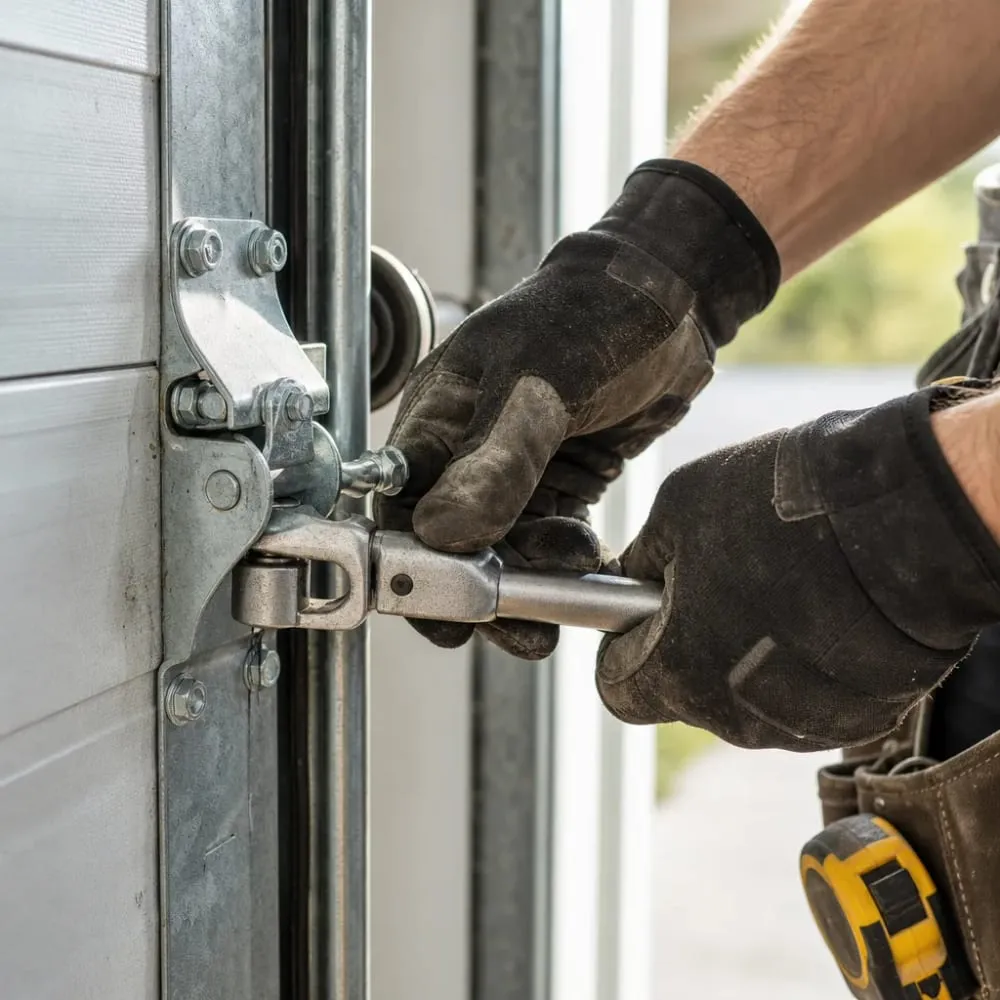
Why Older Philadelphia Garages Often Need Custom Framing
A sectional door is only as good as the opening it's mounted in. The tracks, the spring bracket, and the side jambs all bolt to the frame around your door. If that frame is rotted, out of square, or the wrong size, a brand new door won't sit right, seal right, or run smoothly. In an older garage, the frame often needs work before the new door goes up.
Philadelphia has a lot of older garages. Think of the rear driveway garages under rowhomes in Northeast Philadelphia, or detached and alley garages behind older houses across the city. Many of these openings were built long before today's sectional doors were common. Some first held swing-out doors or one-piece doors. That's why the opening you have may not match what a modern sectional door needs.
Here's what a sectional door needs from your garage, and where older openings tend to come up short:
- Solid jambs on both sides. The vertical tracks screw into the wood jambs along the sides of the opening. Soft or rotted wood won't hold those screws, and the track can pull loose over time.
- A strong header and spring mount. Torsion springs sit on a shaft above the door and put a lot of force on the wall. That mount needs solid wood to anchor into, not crumbling trim or bare old masonry.
- Enough headroom. The door rolls up and back on horizontal tracks, so it needs space above the opening. Low ceilings, beams, or pipes can get in the way. Some doors can be set up with low-headroom track, but someone has to measure first.
- Side room. The tracks and brackets need a few inches of wall on each side of the opening. Tight brick walls or an old post can leave too little space.
- A square, level opening. If the opening leans or the floor slopes, the panels won't line up and the bottom seal won't meet the floor evenly. You get gaps, drafts, and water coming in.
You may already see the signs. Maybe the wood trim around your door is dark and soft near the ground. Maybe there's a wedge of daylight on one side when the old door is closed. Or the door was always a strange size, and you've never found a stock door that fits. Those are clues the frame will need attention.
Skipping this step causes trouble. A door hung on a weak frame can bind in the track, wear out rollers and springs faster, and leak air and water no matter how good the seals are. You end up blaming the door when the real problem is behind it.
This is the same idea that runs through this whole page. A good installation looks at the full system, not just the door in the box. That includes the opening it hangs in. Garage Door Framing is one of our listed services, so if your jambs, header, or opening size need work, we can include it with your installation instead of sending you to someone else.
If the frame needs work, you'll see it listed in the pricing before anything starts. Then you know the full scope up front, not partway through the job.
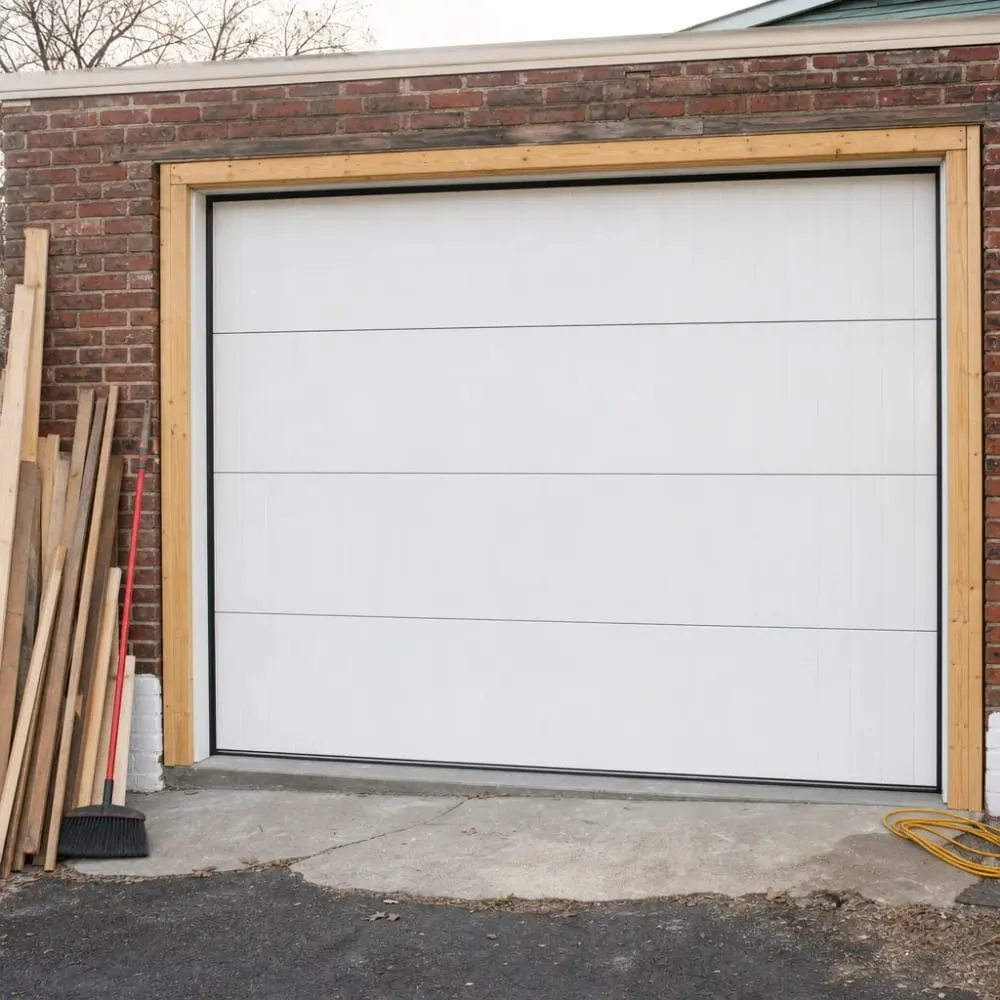
What Happens During a Sectional Door Installation
Once the opening is measured and any framing work is planned, the install itself follows a set order. A sectional door goes up in layers, from the floor to the springs. Each step depends on the one before it. Knowing the order helps you see why a rushed job causes trouble later.
Here's how a standard sectional door installation goes:
- The old door comes out. Its springs hold a lot of stored force, so the tension has to be let off before anything is unbolted. Then the panels, tracks, springs, and old hardware are taken down and hauled away.
- The bottom panel goes in first. It sits level on the floor with the bottom seal already attached. If this panel isn't level, every panel above it will be off too.
- The rest of the panels stack up one at a time. Hinges join each section to the one below, and rollers go into the hinge brackets at the sides.
- The tracks go up. Vertical tracks attach to the jambs on each side. Horizontal tracks run back toward the ceiling and hang from brackets, so the door can roll up and back.
- The springs and cables get set. Torsion springs mount on a shaft above the door, and cables run from drums on that shaft down to the bottom corners. The springs are wound to match the weight of your door.
- The opener is connected or installed. The opener arm attaches to the top panel, and the safety sensors are mounted low on each side of the opening and lined up so they see each other.
- Weather seals go around the edges. Side and top seals close the gaps between the door and the frame, along with the bottom seal on the floor.
The spring setting matters most. A well-balanced door should feel light when you lift it by hand with the opener off. It should stay put about halfway up instead of slamming down or flying open. If the springs are too loose or too tight, the opener works harder than it should, and the rollers, cables, and opener all wear out sooner.
Before the job is done, the door should be tested. Run it up and down several times. It should move smoothly and quietly, with no rubbing or jerking in the tracks. Pass something through the sensor beam while the door is closing, and the door should stop and go back up. Once it's closed, look along the bottom and sides. You shouldn't see daylight, and the bottom seal should touch the floor evenly from one side to the other. Source
On a single-car or double-car home garage, much of this work usually fits into one visit. Plan for your garage to be open while the old door is out, and clear a few feet of space inside the opening and along the ceiling path so there's room to work.
This is where checking the whole system pays off. Panels, tracks, springs, cables, seals, the opener, and sensors all have to work together. If you'd like add-ons such as a keyless entry pad or opener battery backup, they're on our service list, so we can add them to the same job. You'll see everything in the pricing before work begins.
Ready to replace your old door with a sectional door that's installed and balanced right? Call Rock Solid Garage Door Inc at (484) 995-2611, or request a callback on our website.
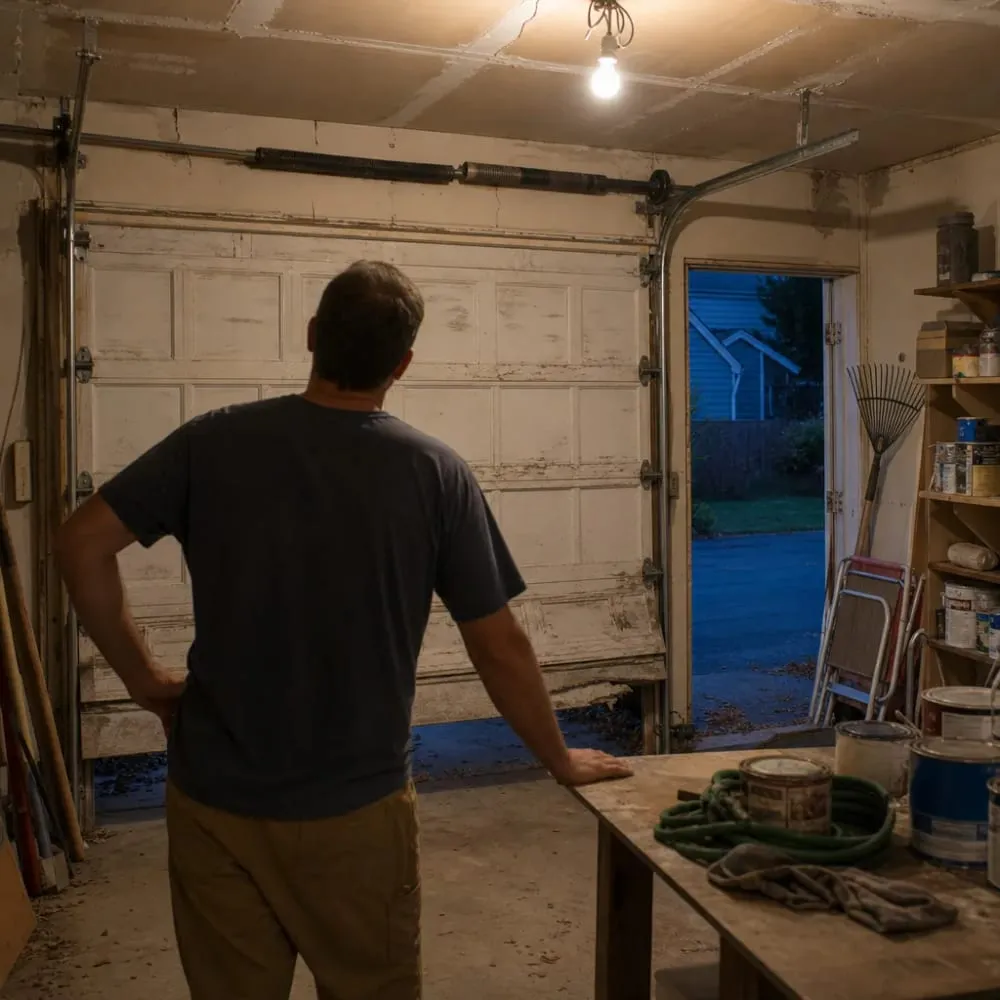
Choosing Door Material and Configuration
The right door for you depends on three things. How do you use the garage? Is it attached to your living space? And how much upkeep are you willing to do? The material you pick also changes the weight of the door. Weight decides which springs, cables, and opener the door needs. So this choice isn't only about looks. It shapes the whole system.
Here are the common materials for sectional doors and where each one fits:
- Steel. This is the most common choice. Steel is strong and costs less to keep up, and it comes in many panel styles. A single layer of steel works for a detached garage you only park in. Insulated steel has a foam core between steel skins. It feels sturdier, runs quieter, and holds heat better.
- Wood. Wood gives a warm, classic look, and it can be made to fit an odd-sized opening. It's heavy, though. It needs paint or stain on a regular basis, and the bottom edge can soak up water. That's where rot starts.
- Wood-look composite or faux wood finishes. These give you the wood look with less upkeep. They're a good fit if you like a carriage-house style but don't want to refinish the door every few years.
- Aluminum and glass. These doors look modern and let light into the garage. They're lighter than wood. Glass panels won't hold heat as well, so they're a better fit for a workshop or a detached garage than a cold room next to your kitchen.
Insulation matters most when your garage shares a wall or a floor with your home. A lot of Philadelphia rowhomes have a garage tucked under the house. A thin, uninsulated door there lets winter cold and summer heat into the room above. In that setup, an insulated door with good seals is worth a close look. If the garage is a stand-alone building behind the house, you may not need it.
Configuration covers the rest of your choices:
- Panel style. Raised panels, flush panels, and carriage-house designs all come on sectional doors. Pick one that suits the front of your house.
- Windows. A row of windows in the top section lets in daylight. Keep them up high if you want privacy or worry about break-ins.
- Size. One wide door or two single doors changes the framing, the springs, and how many openers you need.
- Track type. A low ceiling may call for low-headroom track, as covered in the framing section. Settle this before you order the door.
A heavier door isn't a problem as long as the springs, cables, and opener are matched to it. A heavy door with light springs is a big problem. It strains the opener and wears out the parts that carry the load. That's why we size the hardware to the door you choose, not the other way around.
We're an authorized dealer and installer for Clopay, Amarr, and General Doors Corporation, so you've got real options to choose from. If you aren't sure where to start, a garage door consultation is one of our listed services. We can walk through materials and styles with you. For something less standard, custom garage door design is also on our list. Whatever you pick, the door, the hardware, and any framing changes will all be spelled out in your pricing before work begins.
What Drives Sectional Door Installation Cost
A sectional door installation price isn't just the price of the door. It's the door, the parts that carry it, the labor to hang and balance it, and any work the opening needs. Two quotes can look far apart because one covers the whole job and the other only covers part of it. Once you know what goes into the total, you can compare quotes fairly.
These are the things that move the cost up or down the most:
- Door size. A double-car door has more panel area, more weight, and bigger springs than a single-car door. Two single doors mean two sets of tracks and springs, and often two openers.
- Material and insulation. Insulated steel, wood, and glass doors cost more than a single layer of steel. Heavier doors also need stronger springs and cables, so the material choice affects the hardware cost too.
- Style and windows. Carriage-house designs, decorative hardware, and window sections add to the door price.
- Custom sizing. A stock size costs less. An odd-sized opening may need a custom-built door or framing changes to fit a standard one.
- The opening itself. Rotted jambs, a weak header, or low headroom add framing work or low-headroom track, as covered earlier.
- Old door removal. Taking down the old door safely, letting off spring tension, and hauling it away is real labor. Check whether it's included.
- The opener. Keeping a working opener costs less than a new one. A very old opener, or one too weak for a heavier new door, may need replacing.
- Add-ons. Keyless entry, battery backup, and upgraded seals each add to the total.
Some homeowners save by choosing a basic insulated steel door in a stock size and keeping an opener that still works well. That's often a smart way to cut cost. Reusing old springs, cables, or tracks on a new door is not. Those parts were matched to the old door's weight, and they may already be worn. A new door on tired hardware is how a low quote turns into a repair bill a few months later.
Before you hire anyone, ask these questions:
- Is the price written down, and does it name the door model, size, and insulation?
- Are new springs, cables, tracks, and rollers included and sized to this door?
- Is removal and haul-away of the old door included?
- Is the opener being reused or replaced, and are the safety sensors being reset?
- If the frame needs work, is that listed now, or could it show up as an extra later?
Clear answers to those questions tell you what you're really paying for. Vague answers usually mean something got left out.
We check the full system and the opening first, then give you written pricing before any work begins. The door, hardware, framing, opener, and add-ons are all spelled out, so you know the full cost up front.
Want a clear, written price for a new sectional door? Call Rock Solid Garage Door Inc at (484) 995-2611, or request a callback on our website.
Sectional garage door installation questions
- How long does a sectional garage door installation take?
- On a single-car or double-car home garage, most of the work fits into one visit. The old door and hardware come out, the new panels and tracks go up, and the springs get balanced before the opener and sensors are tested. Your garage will be open during the work, so it helps to clear space inside the opening and along the ceiling path.
- Can I keep my old garage door opener with a new sectional door?
- Yes, if it still works well and can handle the weight of your new door. A heavier insulated steel or wood door may need a stronger opener, so this gets checked as part of planning your install. Reusing a working opener is one of the easier ways to keep costs down, as long as the sensors get reset to match the new door.
- Why does my garage door feel heavy or off-balance after years of use?
- This usually means the springs or cables are worn, not that the panels themselves are bad. A well-balanced door should feel light when lifted by hand with the opener off, and it should stay put about halfway up. If it slams down or flies open instead, the springs are likely too loose or too tight for the door's weight.